Game Log 3: Imagine
The game-making process:
The cards:
For the cards we started on creating a neater looking card than the papercuts we had, we also tried to implement more storytelling into the cards. To make the EU-values more an item of speech during the game.
We also implemented an extra option of cards by removing the luck factor a little bit and giving the player more faith into their own hands. We did this by adding; drawcards, stormcards and improving the actioncards. The action cards were first straight forward and in your (dis)advantage, so we changed this to a two way statement, so an option for both players instead of one option as it was done before.
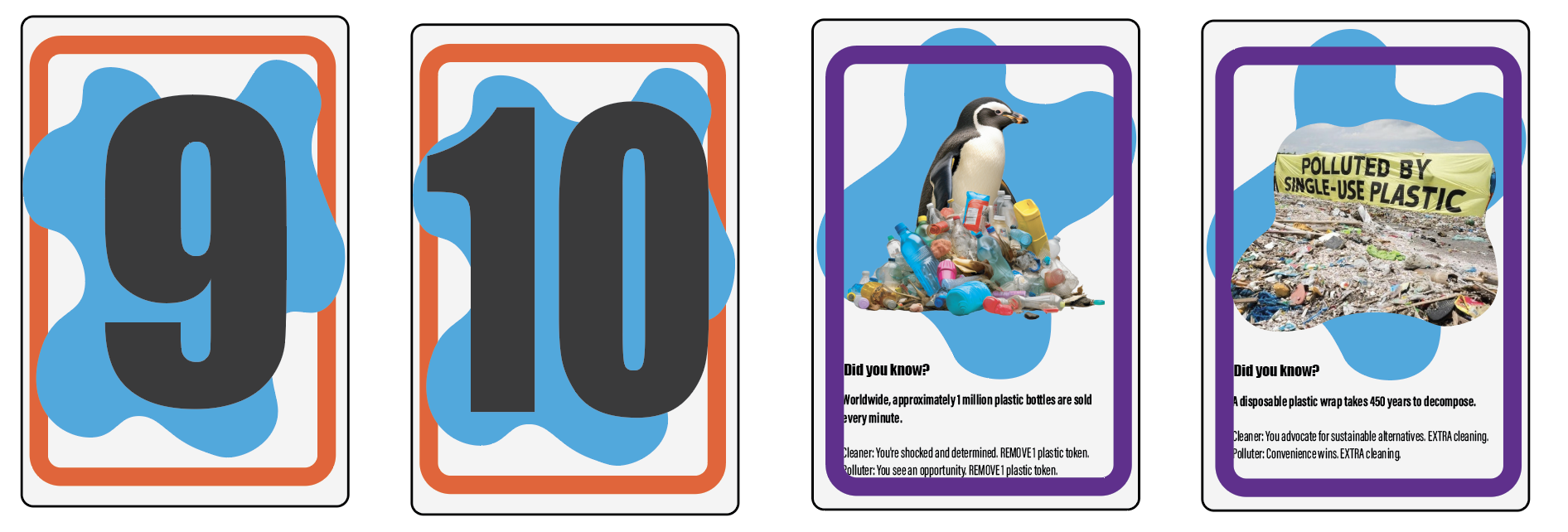
“Remove 2 fiches” changed into an “Remove 2 fiches for 1 team and add 2 fiches for the other player”.
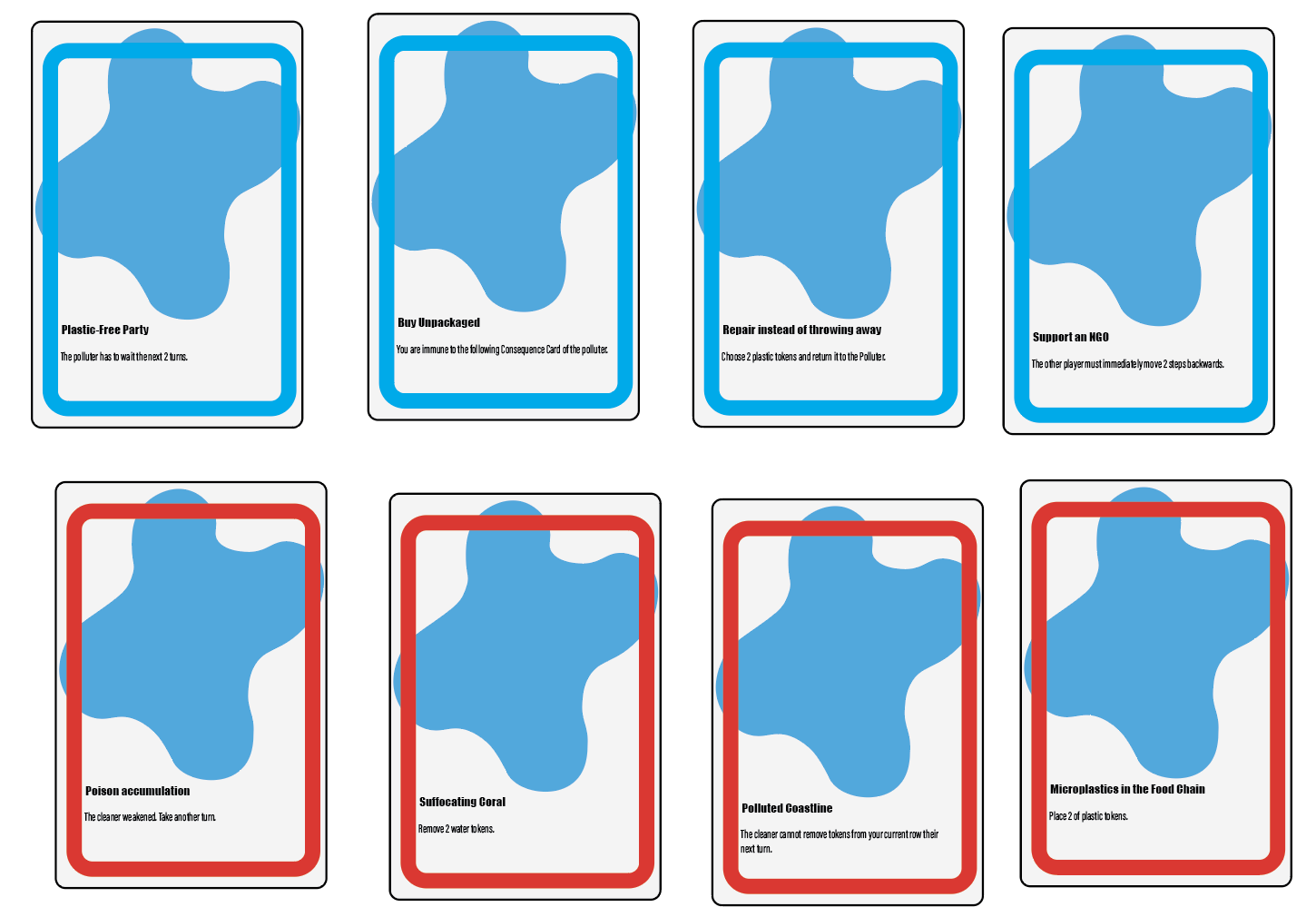
We also created 2 draw decks with facts, and special attacks. After play-testing these cards we realised it didn't really work and a lot of players resulted in getting confused. Therefore we improved the cards again. By making one clear statement on each actioncard, also on the draw cards we made it so the opponent is losing a fiche on the board. Also we upgraded the stormcards so they look more in theme with the rest of the cards.
The board:
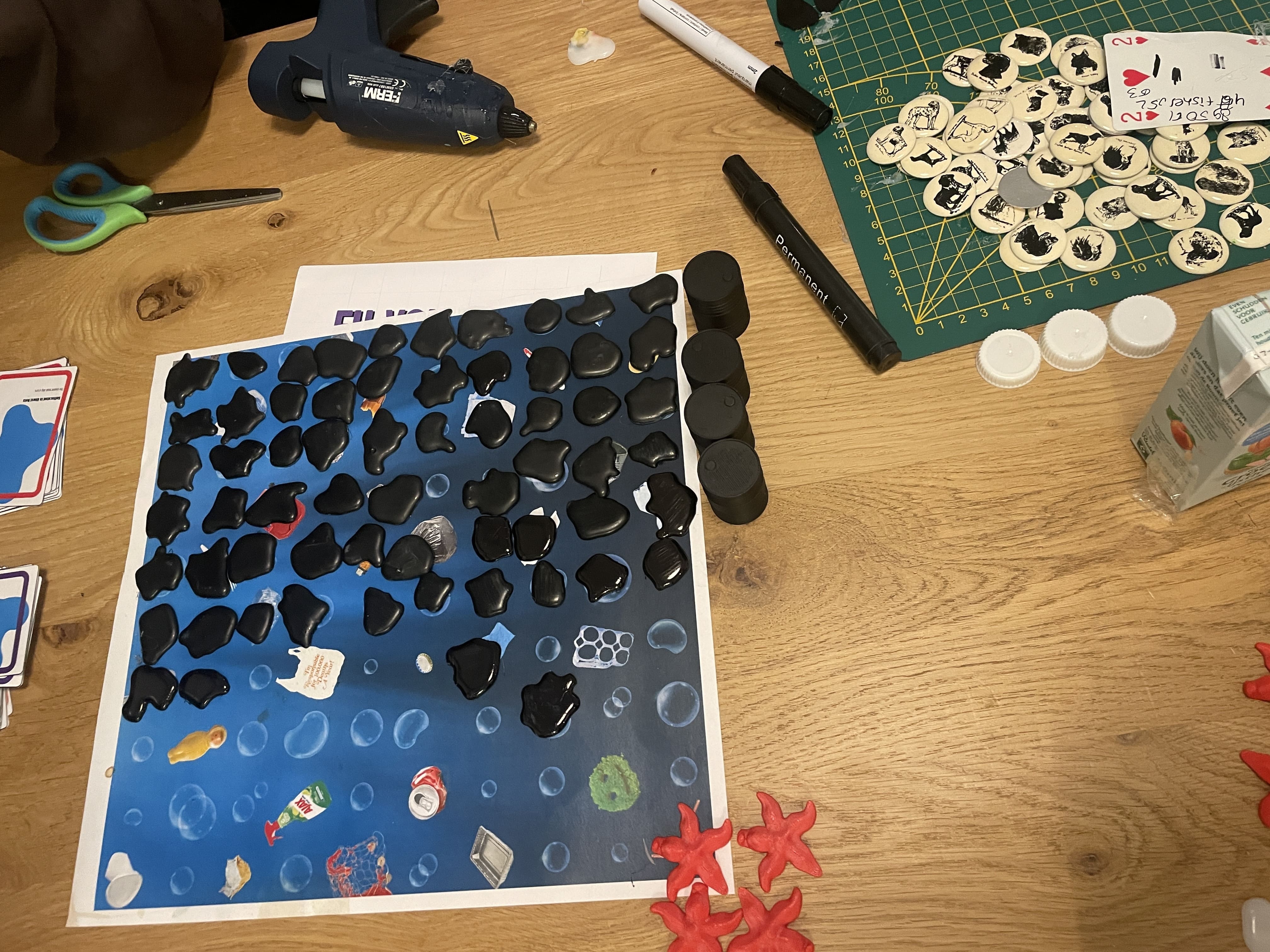
While making the game board we had to make sure it fit the setting of our story. Earlier on we got the feedback that our board looked too much like a playing board and missed some fantasy and story telling. That is why we decided to make it look like a polluted ocean, where every space was filled with either plastic soup or a bubble. While choosing the waste, she made sure it was either red, yellow, blue, clear or white to match the already made cards. In the game if you land on the plastic soup space, you would have to draw a special card. Elena made the board and asked the group for feedback on it. Casper noticed that some plastic soup was biodegradable or paper waste, which didn't fit the theme much. That is why she changed it to plastic soup that would last longer in the ocean and would do greater harm to nature.
First board vs after changes:
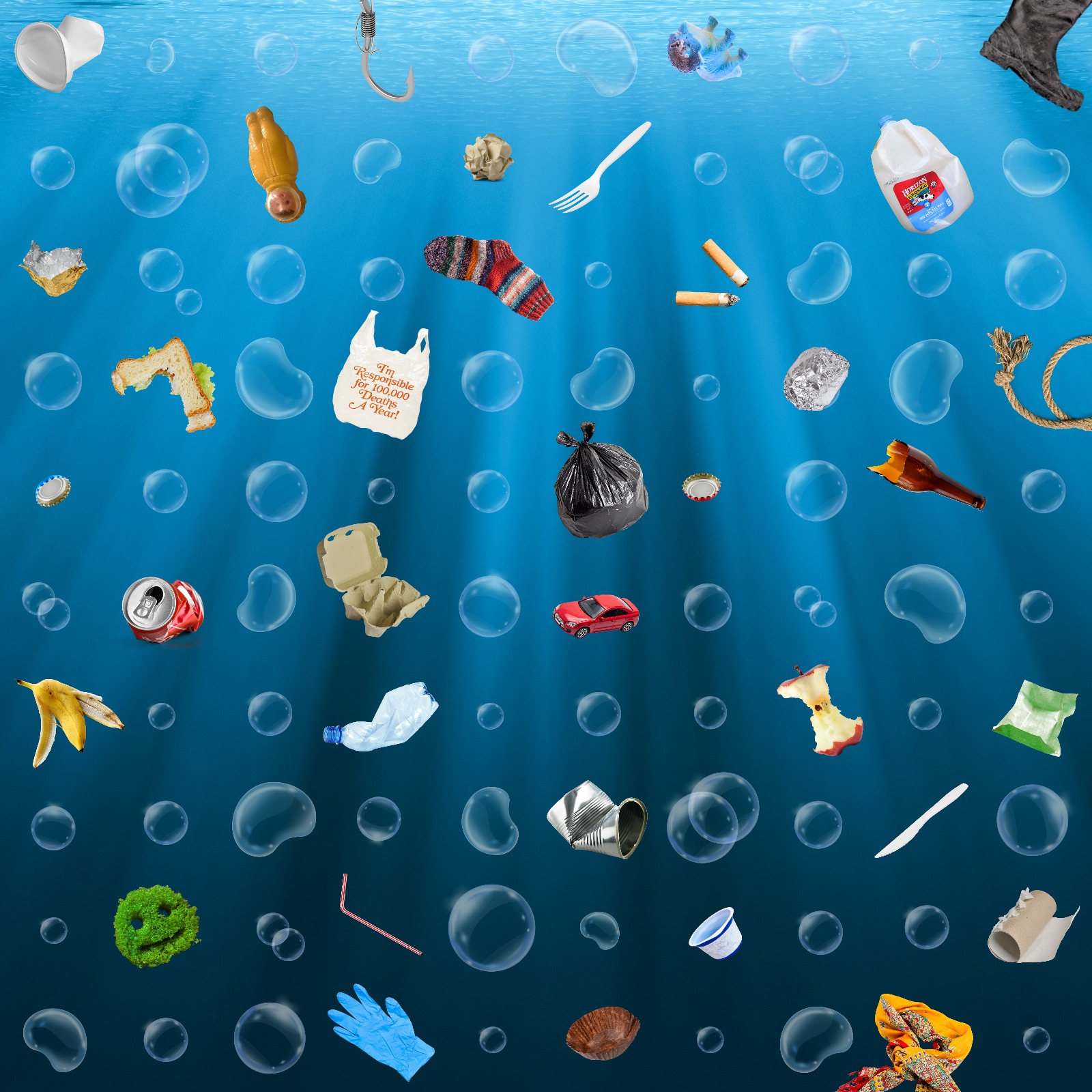
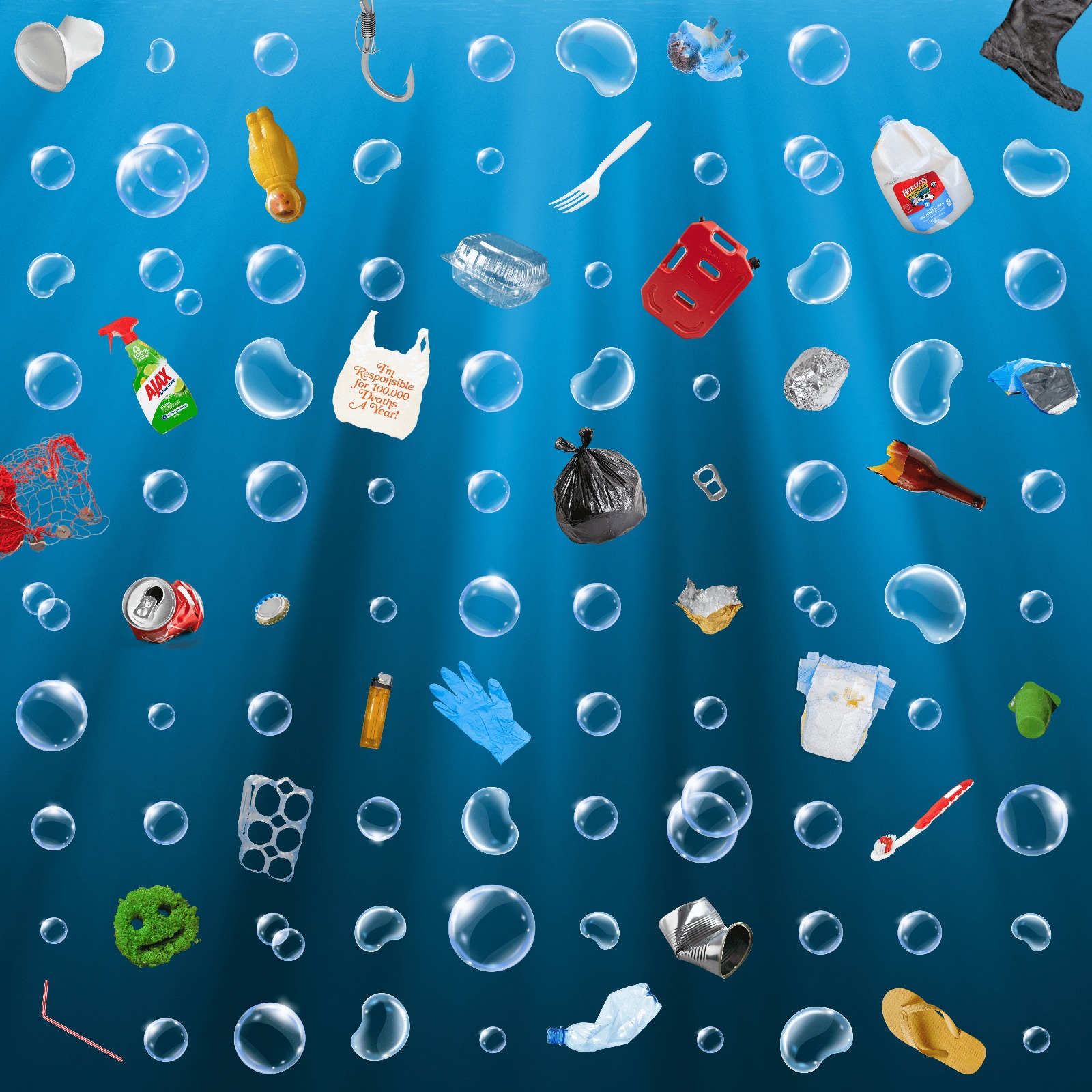
For the fiches we decided to give the new and old generation (the two teams) different ones. For the old generation we decided to make the fiches look like oil spills, symbolising them polluting the ocean. For the new generation, the decision was more tricky. At first we thought maybe a bubble or spill of water, that would wash the pollution away. Exept: that would not be a solution for the plastic soup problem. That is why we did a quick research and found out that buoys are being used to track and monitor the plastic in the ocean and that even smart filter buoys exist.(Pero, 2025) That is why we choose buoys as the fiches for the new generation, since it fitted their mission to clean up the ocean.
The fishes & The trophy:
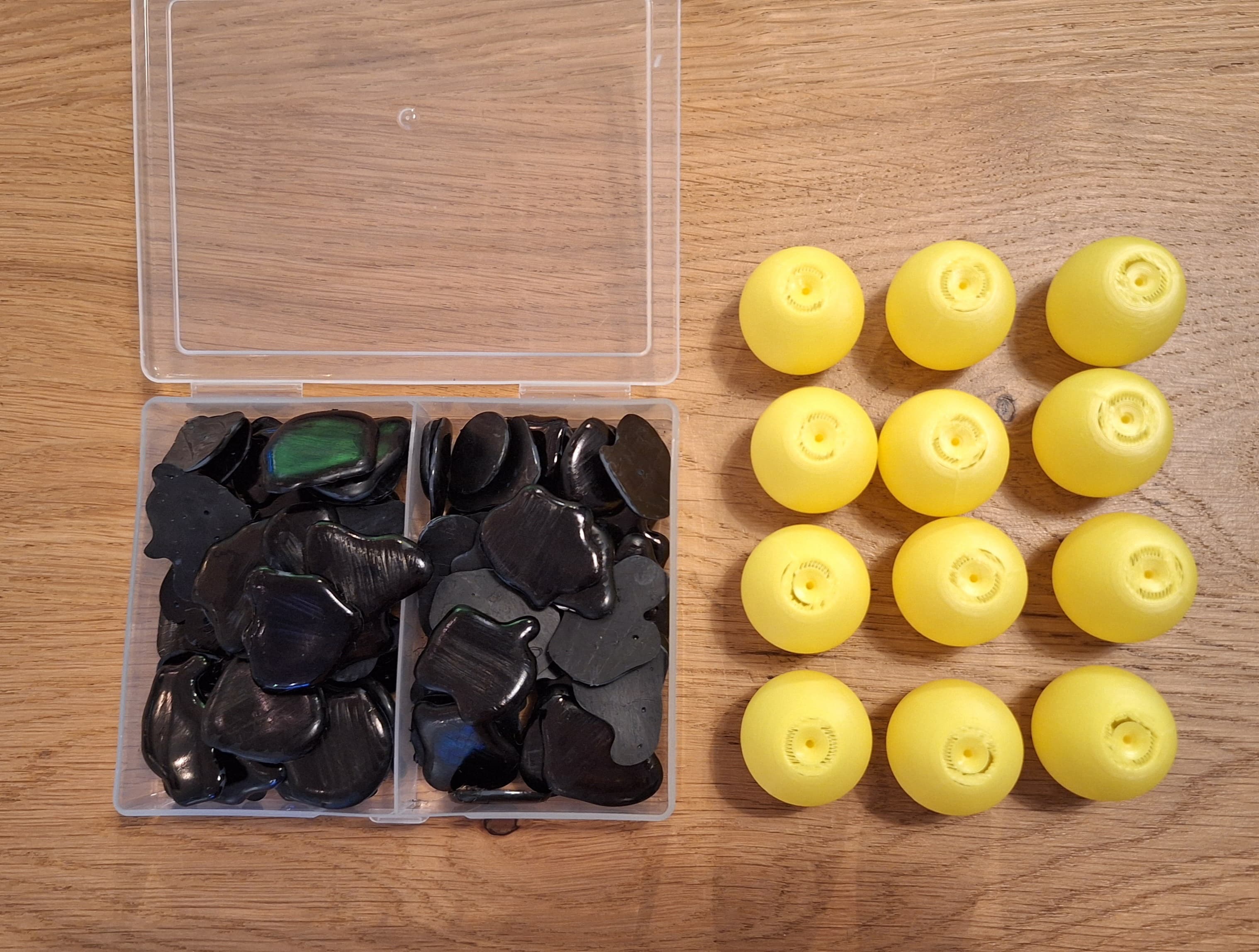
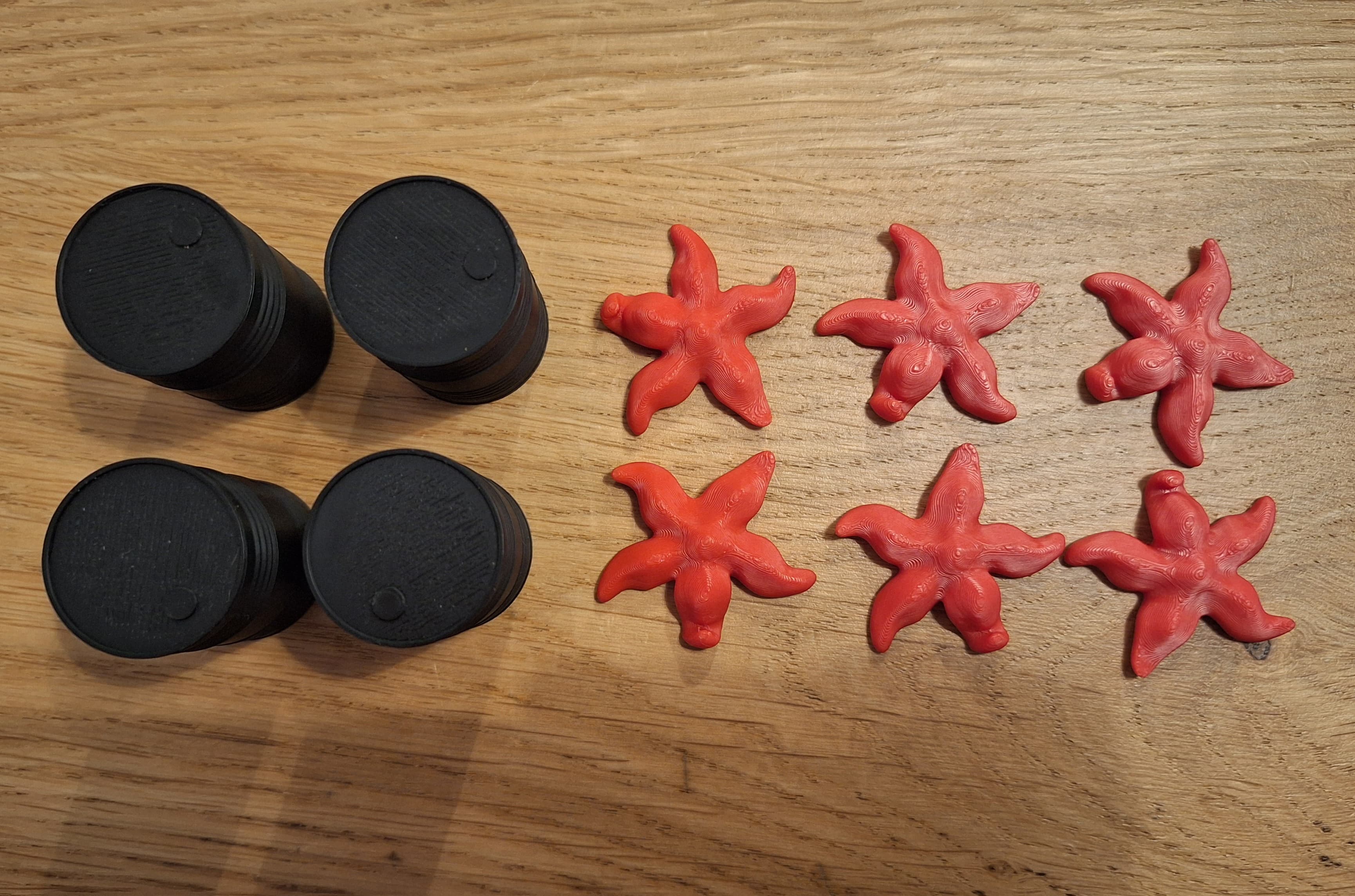
For the objects players put on the board after making 5 in a row with their fiches, we also decided to give each front (new vs. old generation) different objects. For the old generation we gave them a full oil tank, to further set the theme of the oil spill and pollution of the ocean. For the new generation we gave them red sea stars. The red sea stars would symbolise the ocean clearing up and the sea life slowly blossoming again.
For the manual
Design manual
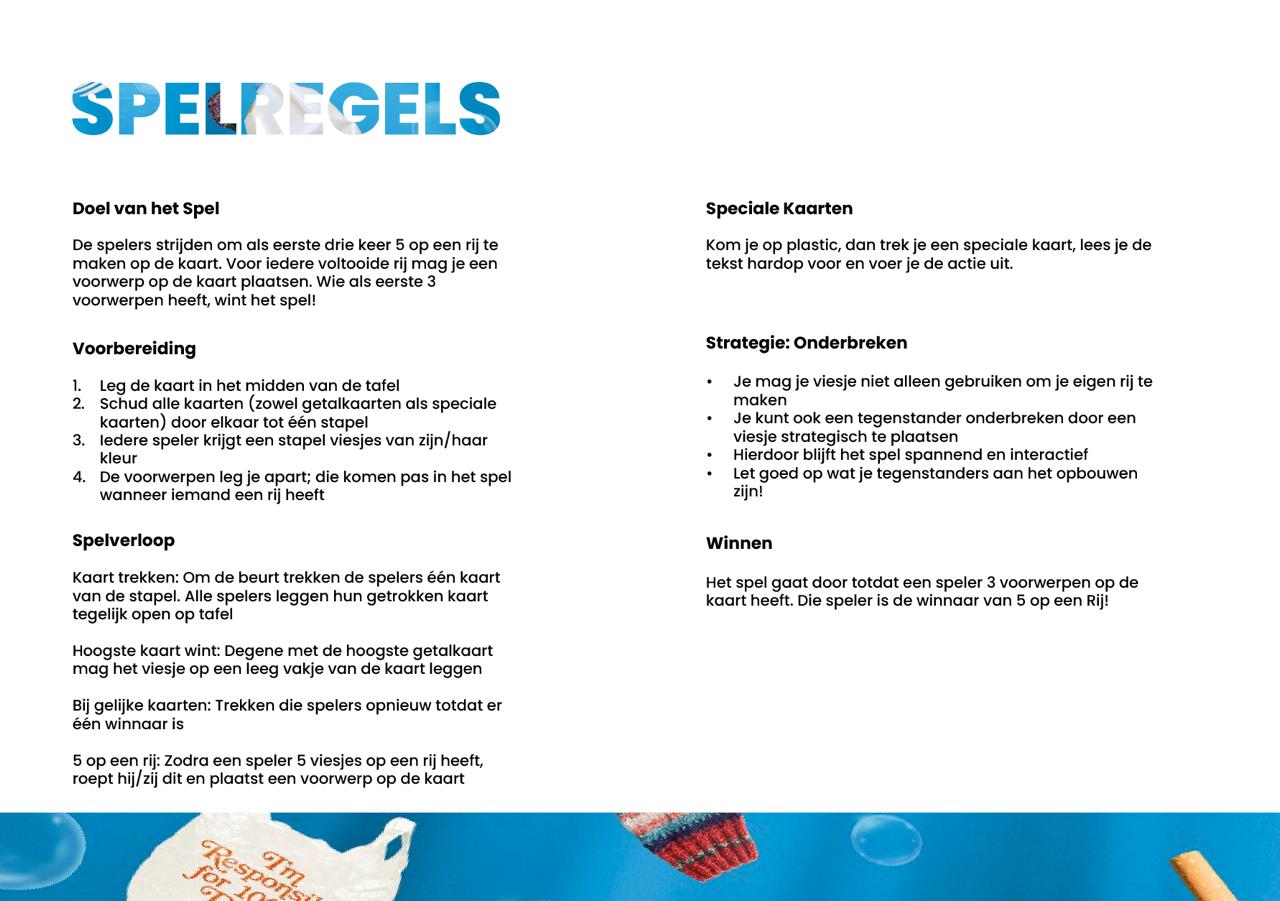
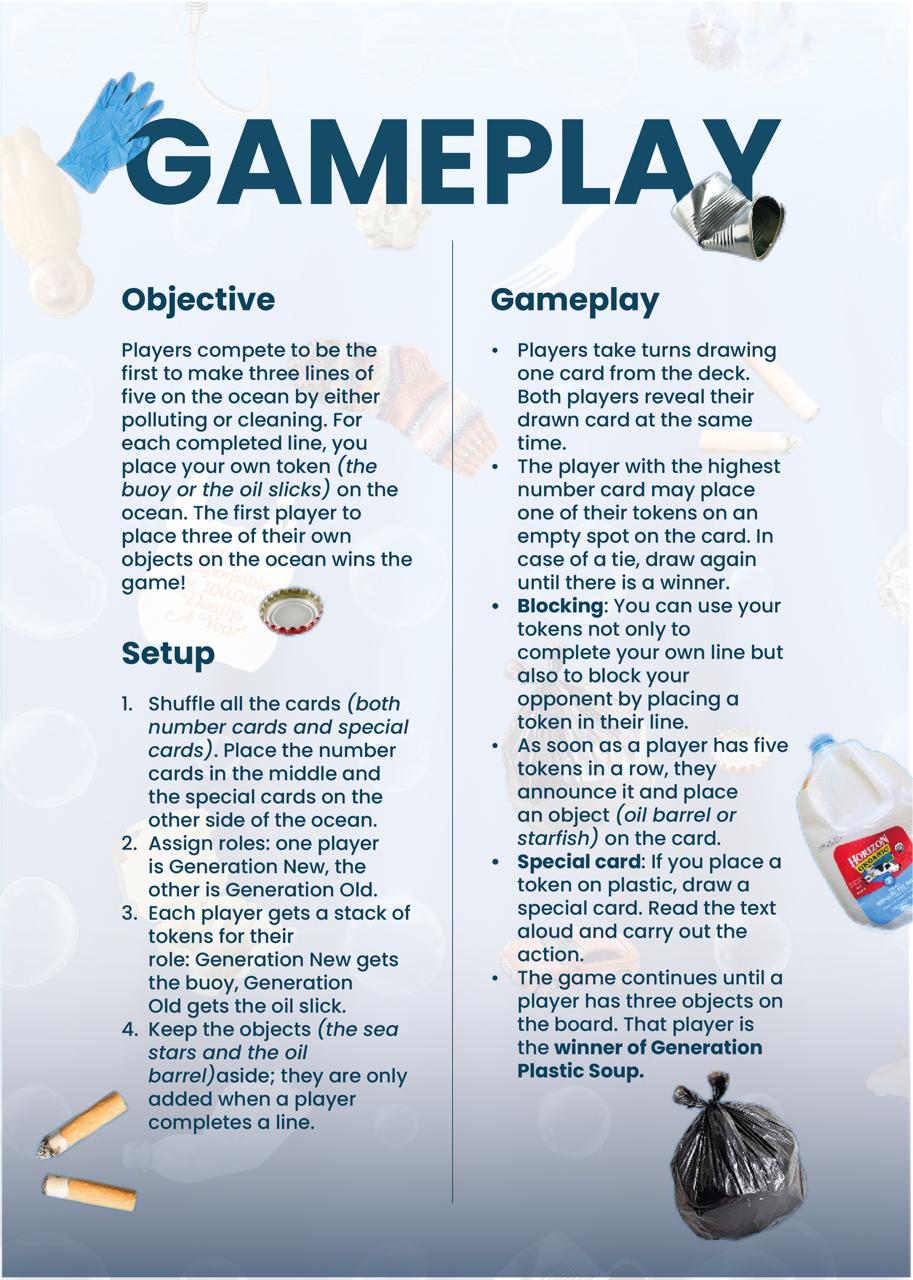
We started by looking for other manuals other games use. The inspirations came from the game 30 seconds for the design. The manual needed to have a realistic vibe so it fits with the board and the cards. First we started with dark blue, but we choose for light blue tho make it more playful. We’ve took the garbage from the game board to make it co-hensci. We’ve ask some feedback outside this class and we got the advice to make some visuals in the manual. Because the board we now have in not hight-fi already we choose only put the action cards extra in.
Storytelling manual
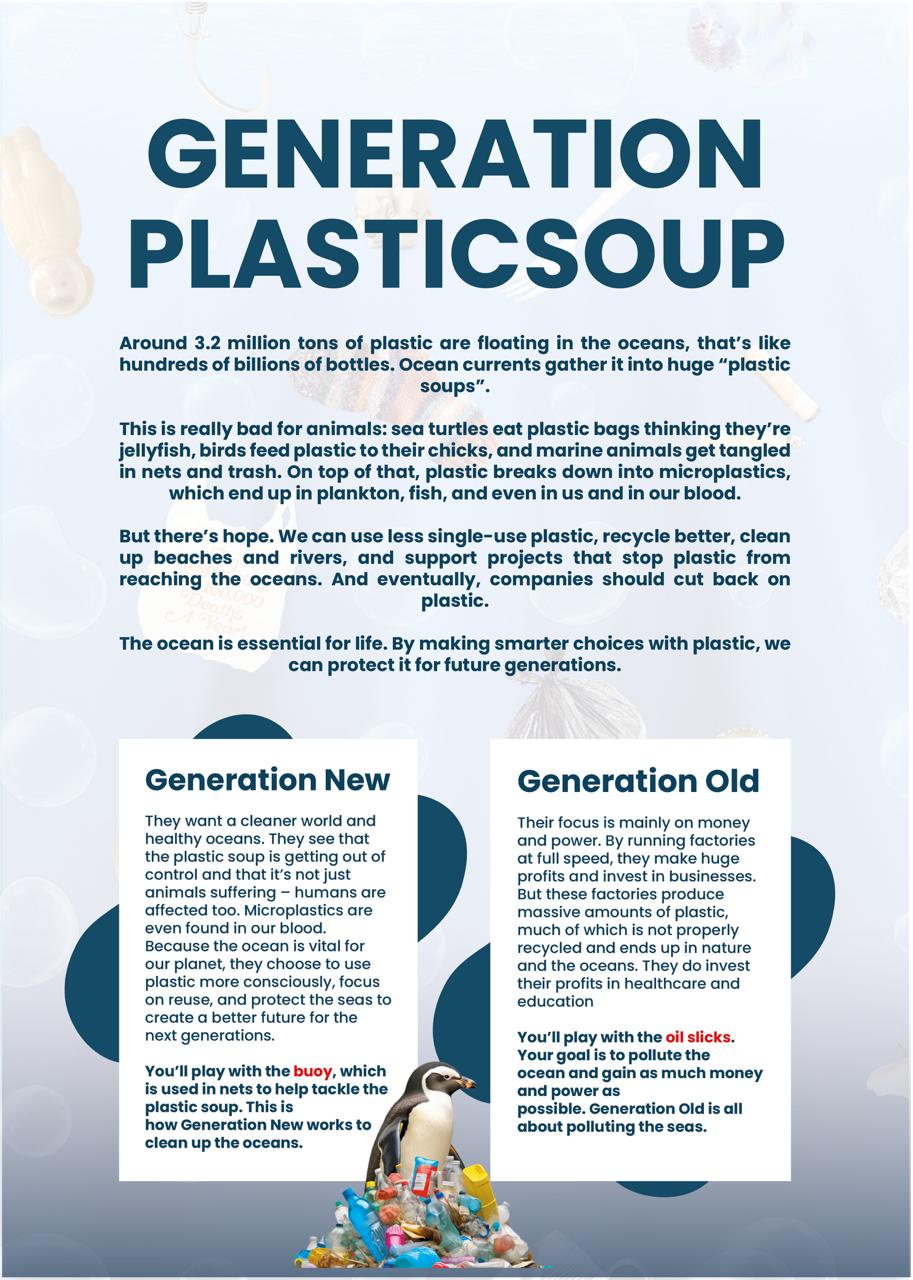
For storytelling we’ve got stuck. It was really hard to have storytelling and be informative at the same time. Intern we gave feedback to make it more storytelling. We’ve changed by adding more story to the page “generation Plasticsoup” so the player can identify with the generations.
Versie 1
Versie 2
From the playtest:
Our EU value is human dignity. We didn't notice any engagement with the value, because it was not integrated in the game, only mostly in the manual. We could add this to the game by maybe letting the players feel the disadvantage. For example, when to water is too polluted, maybe they don't have access to drinkwater and get dehydrated for a turn (aka their turn is deducted from them)
We also see that the EU value equality could play a role in the game, since the old generation has a lot more power and money then the new generation. We could add this in the game to give the old generation a starting advantage.
While play testing, we noticed that the game wasn't very playable. We noticed a few mistakes:
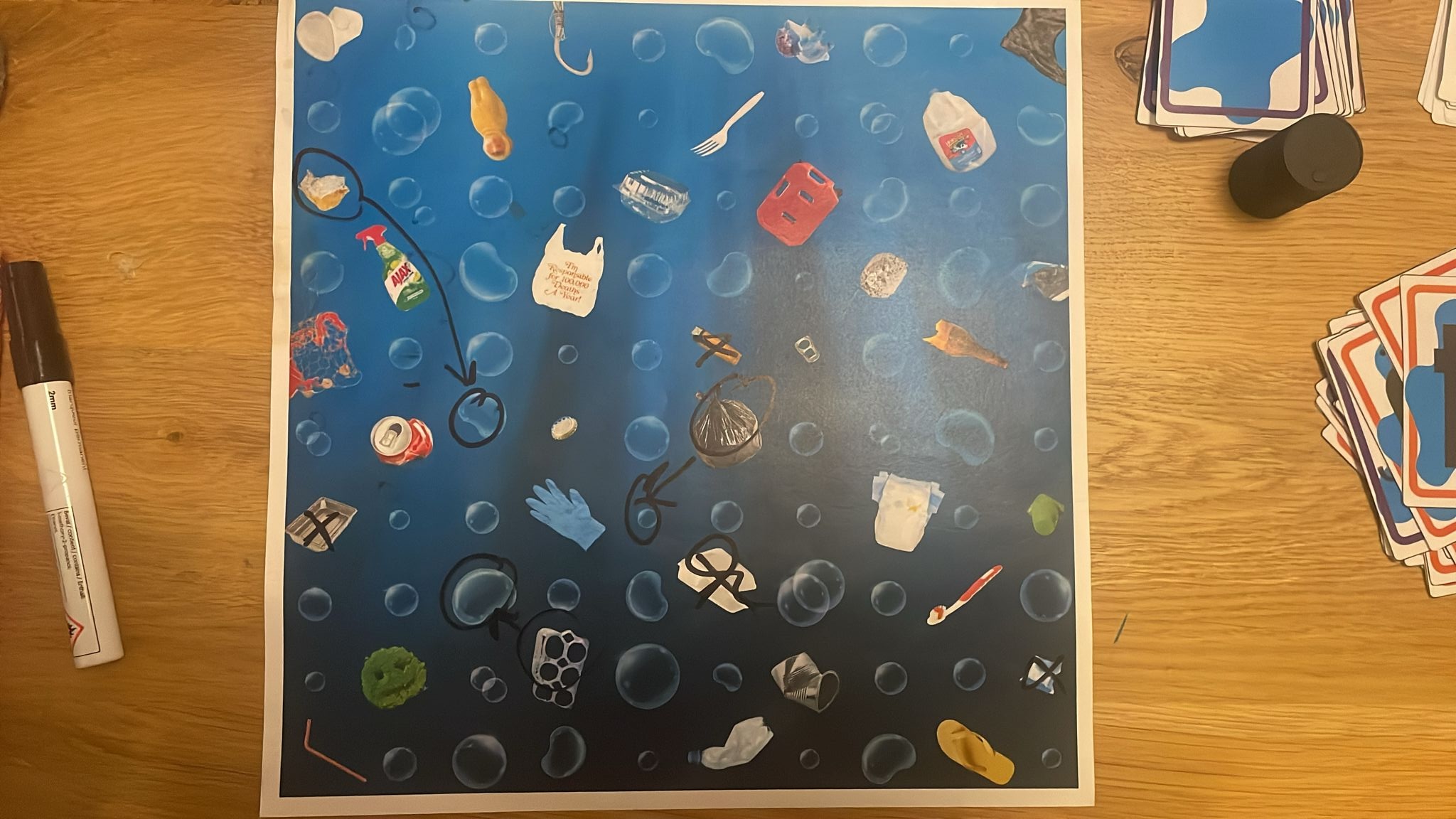
1. The board had too few special spaces on some spots, which made it too easy for the players to make a row of 5. Therefore, the game ended too quickly. See the image below, for the changes that need to be made:
2. The cards also didn't make a lot of sense for players, since there were some last minute changes to the cards. These changes made the game unplayable, since the cards were not integrated in the gameplay on the board.
Action points for the upcoming day?
- Ask for help for storytelling too make the instructions easier to understand and more fun
- Integrate the EU values more into the game
- Improve the cards
- Improve the board